These measures are not interchangeable: pounds removed is cumulative biomass, while the percentage figures come from historic surveys and monitoring. See the linked sources below.
The short answer
Utah Lake carp removal is a coordinated habitat-restoration tool. Managers use commercial harvest to reduce common-carp biomass; anglers and bowfishers can supplement that work. The objective is sustained control at a level that gives aquatic vegetation and native fish habitat room to recover—not a promise that every carp will be eradicated.
How common carp changed Utah Lake
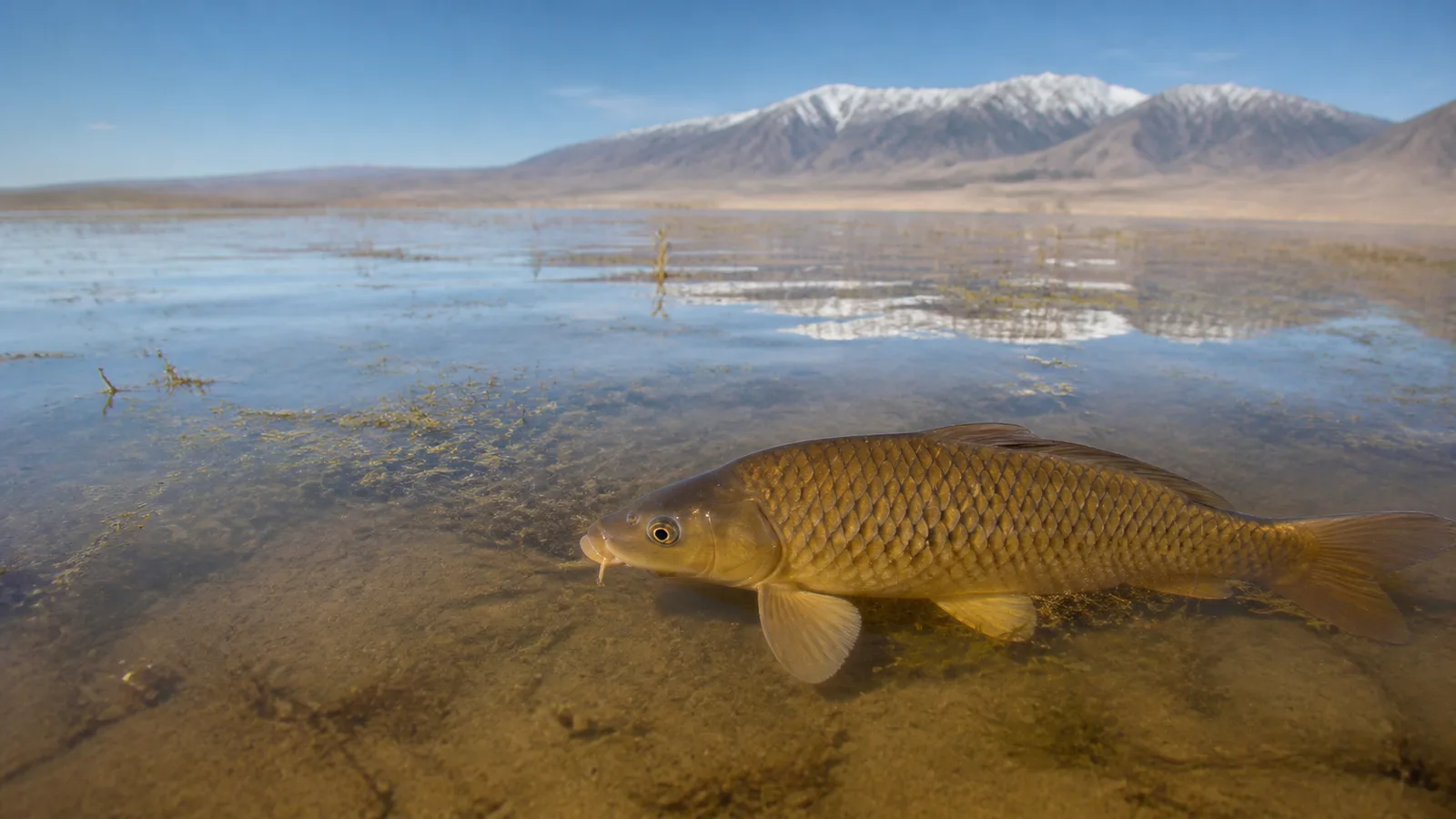
Common carp (Cyprinus carpio) were introduced to Utah Lake in the 1880s. In the shallow, productive lake, the population expanded until early-2000s estimates placed carp at more than 90% of total fish biomass.
Carp feed by rooting through bottom sediment. That action can uproot submerged plants and keep fine sediment suspended. Peer-reviewed experiments have found significant reductions in aquatic-plant abundance where common carp were present. At Utah Lake, managers treat carp control as one part of a larger recovery program that also restores tributaries, wetlands, and nursery habitat.
Aquatic vegetation
Rooting and turbidity can make it harder for submerged plants to establish. Monitoring has reported vegetation returning in some areas as carp density declined.
Native-fish habitat
Young June suckers benefit from protected, vegetated nursery habitat. Carp control supports that goal, alongside flow, wetland, delta, and fish-management projects.
What the removal numbers mean
The Utah Lake Authority reports that coordinated crews have removed just over 35 million pounds of carp since September 2009. The June Sucker Recovery Implementation Program reports a 78% decline in carp density since 2012 based on standardized monitoring.
Those results show substantial control, not eradication. Carp remain established and highly reproductive. Continued removal and comparable monitoring are needed to keep the population from rebounding and to separate carp effects from water level, drought, nutrients, and other lake-wide pressures.
June sucker status
The June sucker (Chasmistes liorus) occurs naturally only in the Utah Lake system. It was listed as endangered in 1986 and downlisted to threatened in 2021 after measurable recovery progress. “Threatened” still means the species is federally protected and ongoing habitat, flow, propagation, and non-native-fish work remains necessary.
How anglers can help legally
Fish with a rod
Use legal bait and rigs. Loose chumming is prohibited at Utah Lake, and a license is required for anglers age 12 and older.
Bowfish carefully
Review the tributary night closure, local discharge ordinances, lighting rules, and safe disposal before launching.
Handle the catch legally
You may release a carp alive. If retained, it must be killed immediately and cannot be left on the shoreline.
Utah Lake carp removal FAQ
Why are common carp removed from Utah Lake?
Common carp root through shallow sediment while feeding. That disturbance can uproot aquatic plants, suspend sediment, and reduce nursery habitat. Utah Lake managers remove carp to lower that pressure while native-fish and vegetation projects continue.
How much carp biomass has been removed from Utah Lake?
The Utah Lake Authority currently reports just over 35 million pounds removed since the coordinated effort began in September 2009. The figure is cumulative biomass, not a count of individual fish.
Are common carp gone from Utah Lake?
No. The program is long-term population control, not a claim of eradication. Carp remain common, reproduce quickly, and require continued monitoring and removal pressure.
Is the June sucker still endangered?
The June sucker was downlisted from endangered to threatened in 2021. It is found naturally only in the Utah Lake system, and recovery work continues.
Does catching a carp help Utah Lake?
Keeping a legally caught carp removes one fish, although commercial removal accounts for the large-scale totals. If you retain a carp, Utah rules require you to kill it immediately and not leave it on the shoreline. Releasing a legal catch alive is allowed.
Sources & review notes
Last fact-checked: August 12, 2026
- Utah Lake Authority: Frequently Asked Questions (opens in a new tab) — current removal total, historic biomass, introduction and management overview
- June Sucker Recovery Implementation Program: Managing Non-native Fish (opens in a new tab) — commercial-removal program, density monitoring and vegetation response
- U.S. Fish & Wildlife Service: June sucker recovery milestone (opens in a new tab) — 2021 downlisting from endangered to threatened
- Freshwater Biology: experimental evidence on common carp and aquatic plants (opens in a new tab) — peer-reviewed evidence that carp can reduce macrophyte abundance
- Utah DWR: 2026 Utah Fishing Guidebook (opens in a new tab) — current take methods, nongame limits and disposition rules
Regulations and access can change. Use the linked agency sources as the final authority before a trip.
Choose your next guide
Learn a legal method, verify current conditions, and plan safe disposal before you fish.